Mallorca from within. The materials that define the island’s homes

August 22, 2026 · 5
There is something about Mallorca’s homes that is hard to imitate. It isn’t just the light, the orientation or the views. It is the way the materials speak to one another: stone that soaks up the midday heat, wood that creaks underfoot in summer, linen that moves with the Mediterranean breeze.
Interior design in Mallorca has an identity of its own, one that is not built on imported trends but on a deep understanding of the island and of how people live on it.
At Trends Studio we have spent years working with these materials on very different projects —main and second homes, boutique hotels, retail spaces— and we have learned that when they are used well, there is no need to look for anything else. The island already has everything it needs to create extraordinary spaces.
Stone, the material that connects the house to the island
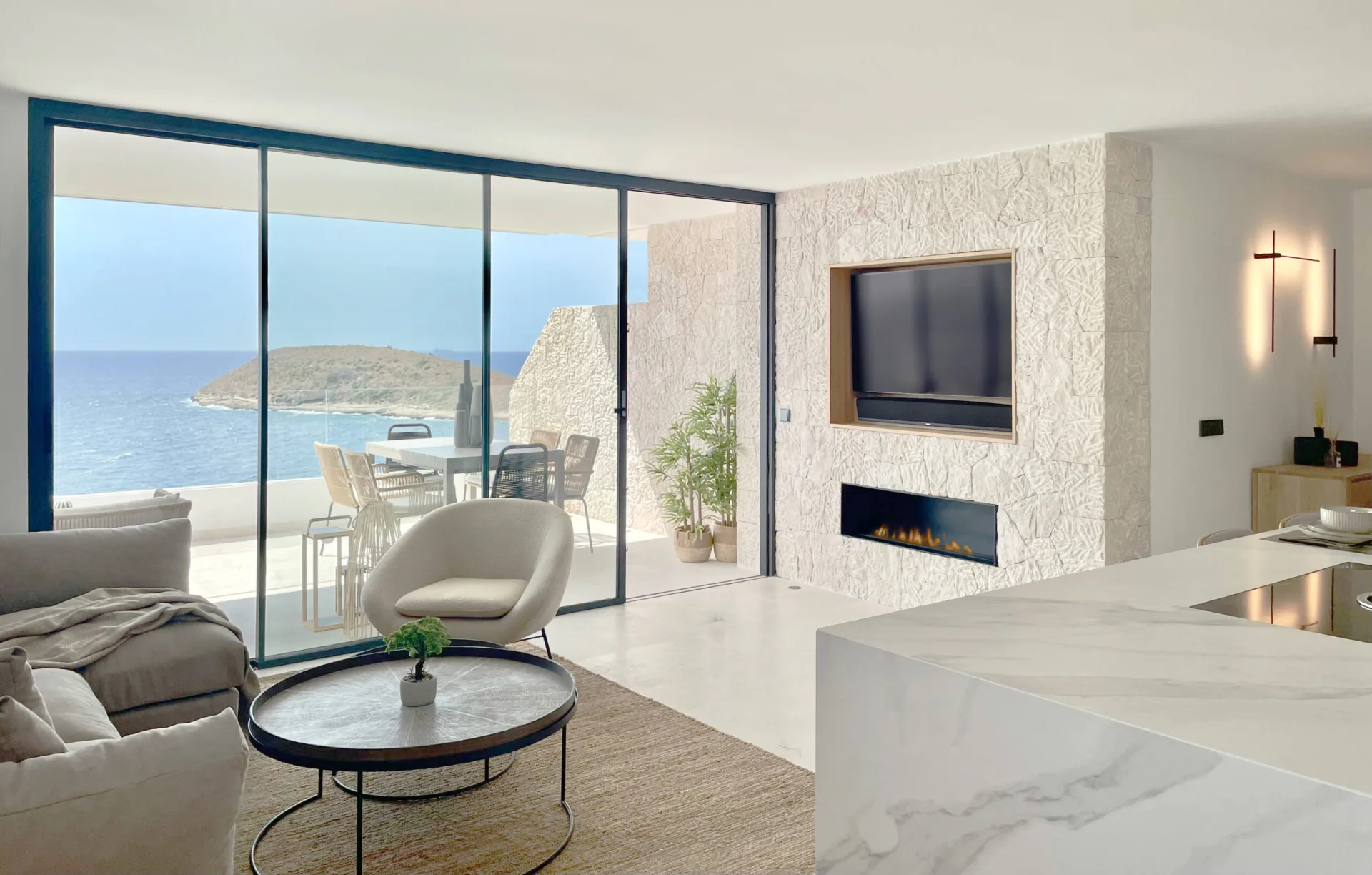
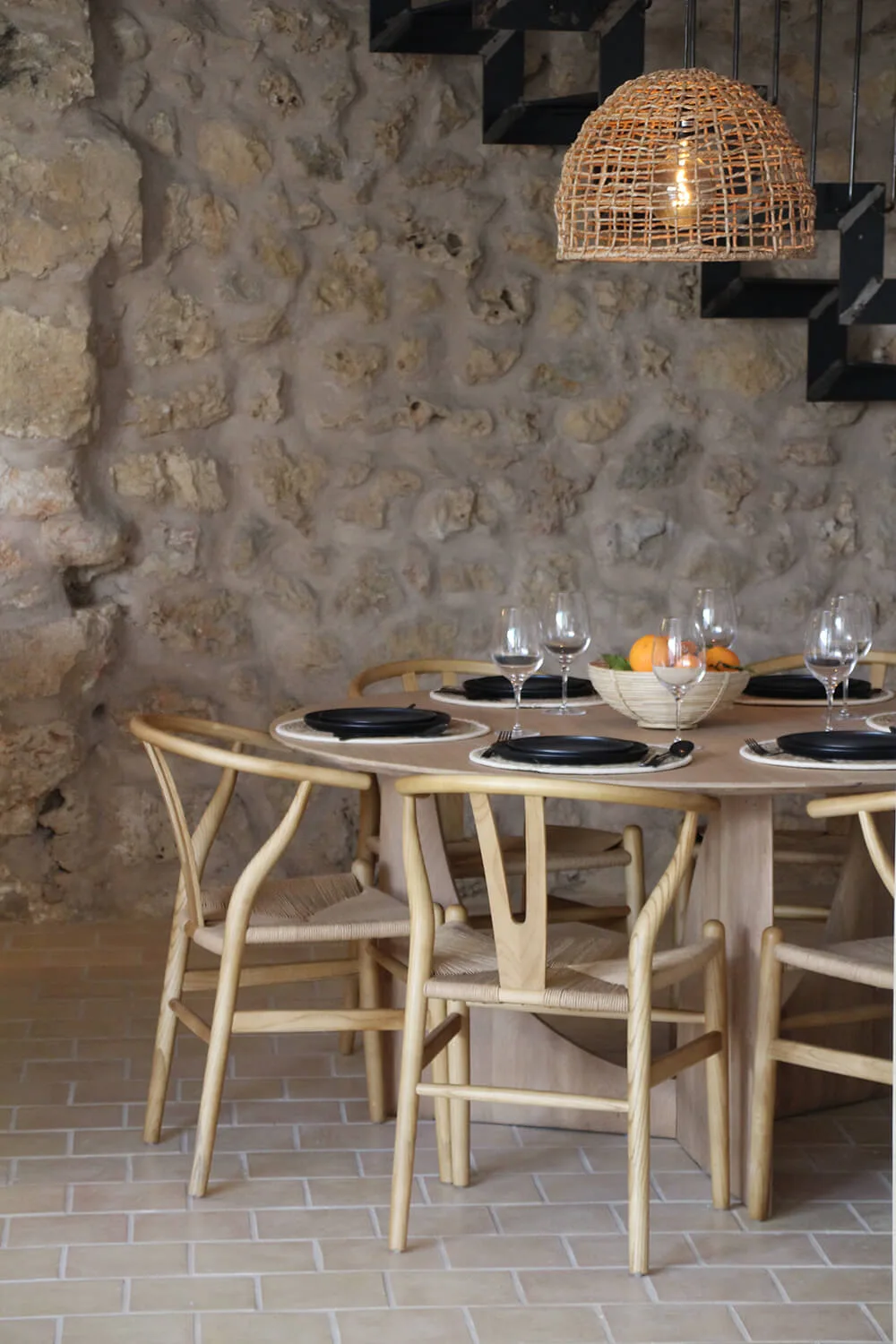
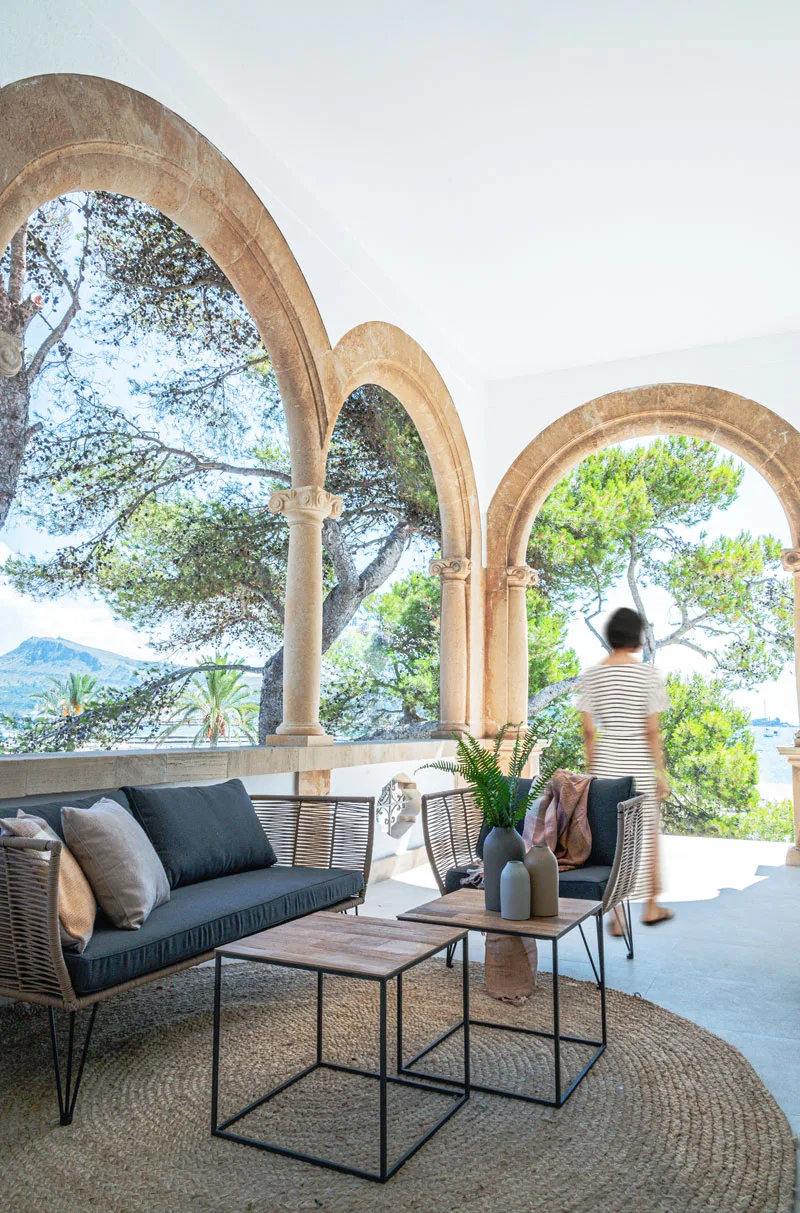
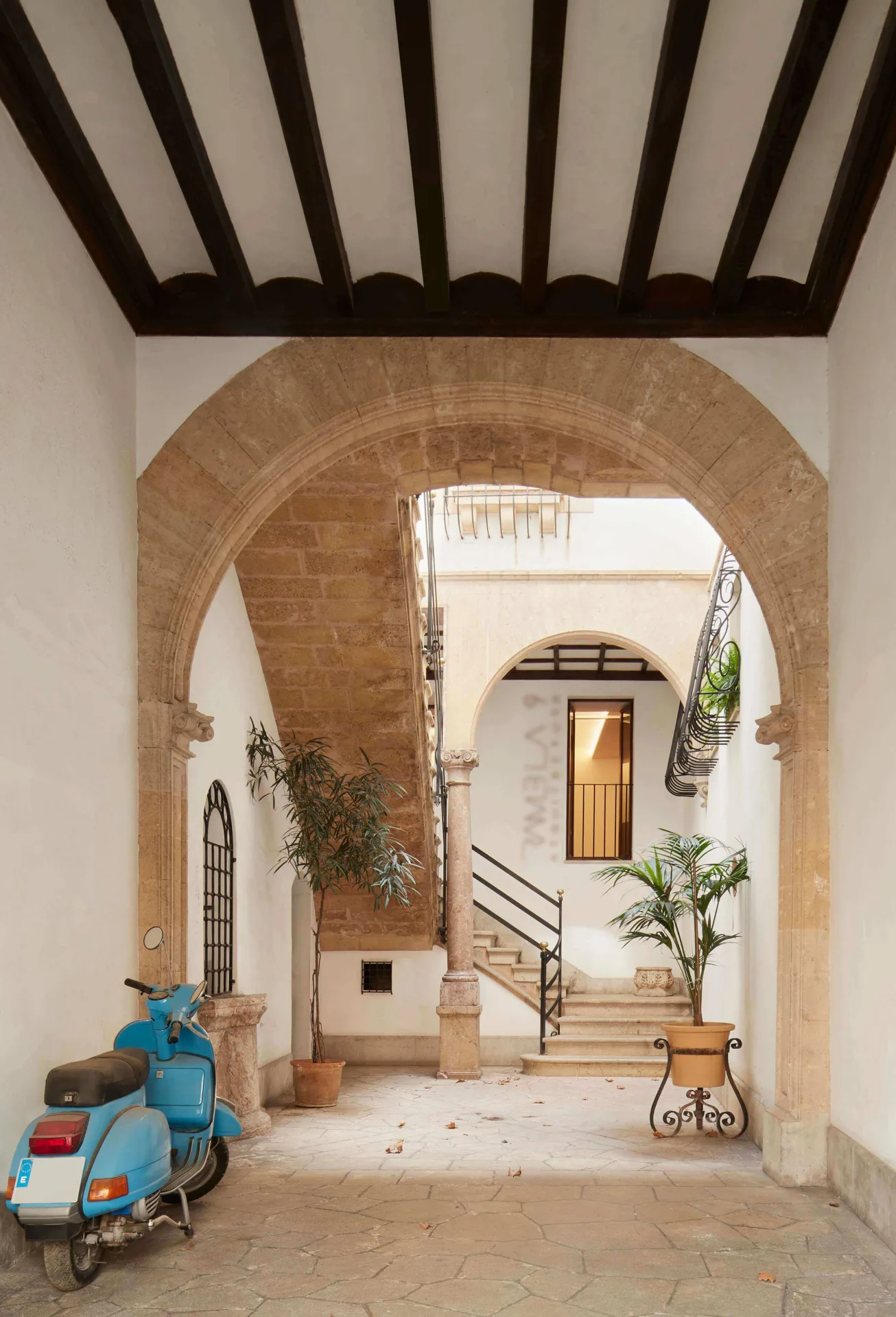
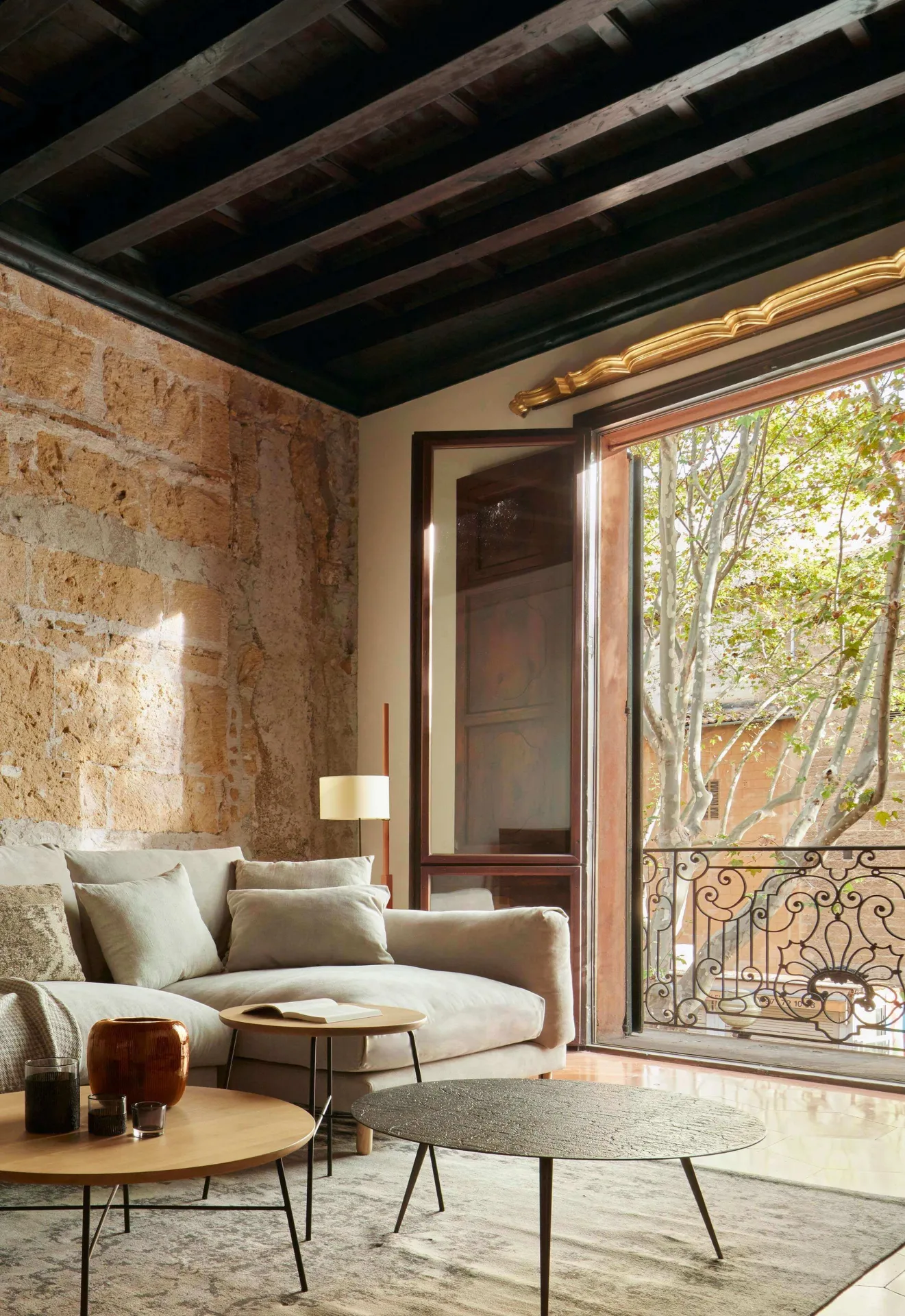
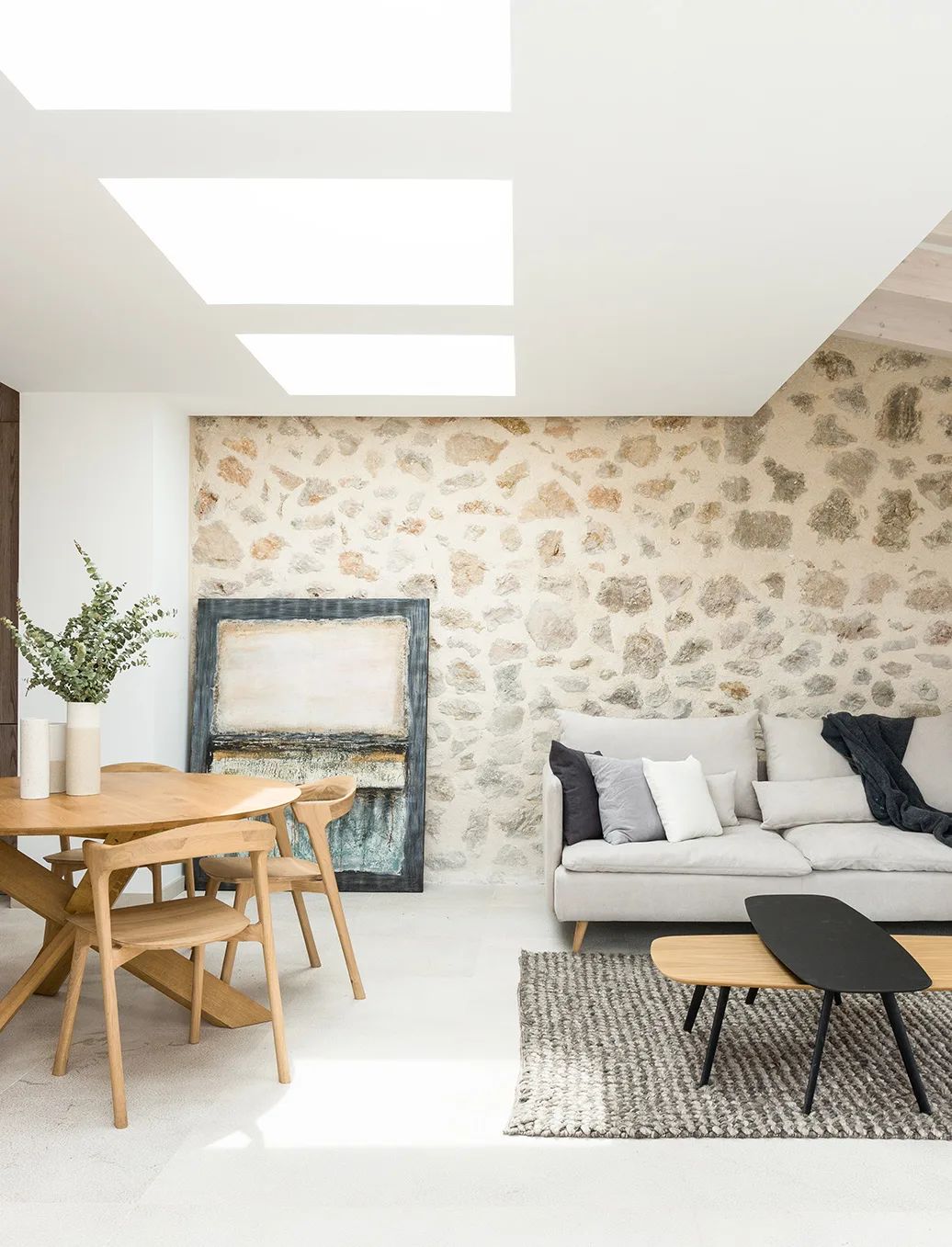
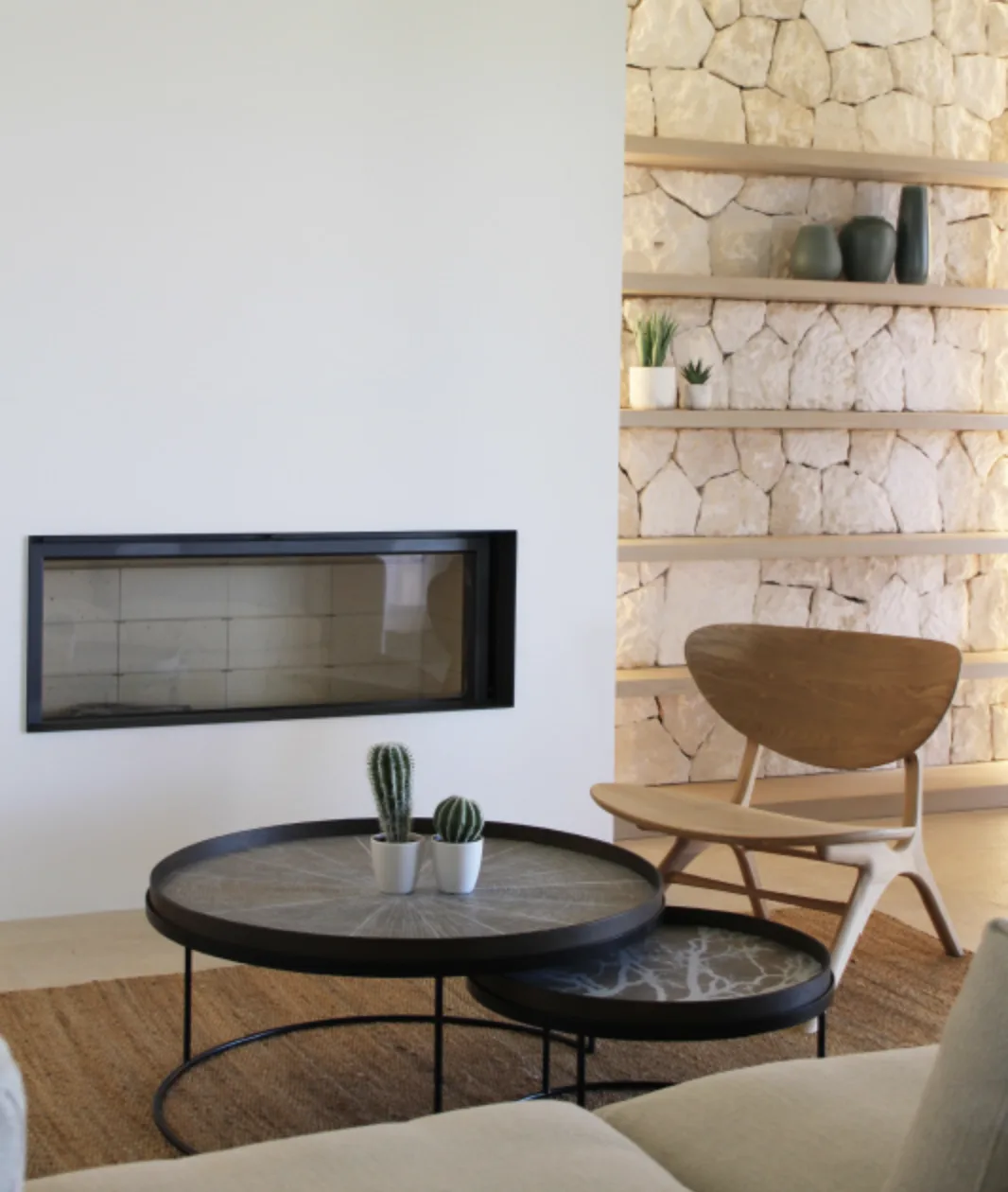
Marès stone is the most characteristic material of Mallorcan architecture. Golden in colour and porous in texture, it takes in light in a way no artificial cladding can replicate. In the interior design projects in Mallorca we develop, stone appears on feature walls, around door and window frames, on floors in circulation areas and in fireplaces that visually anchor the space.
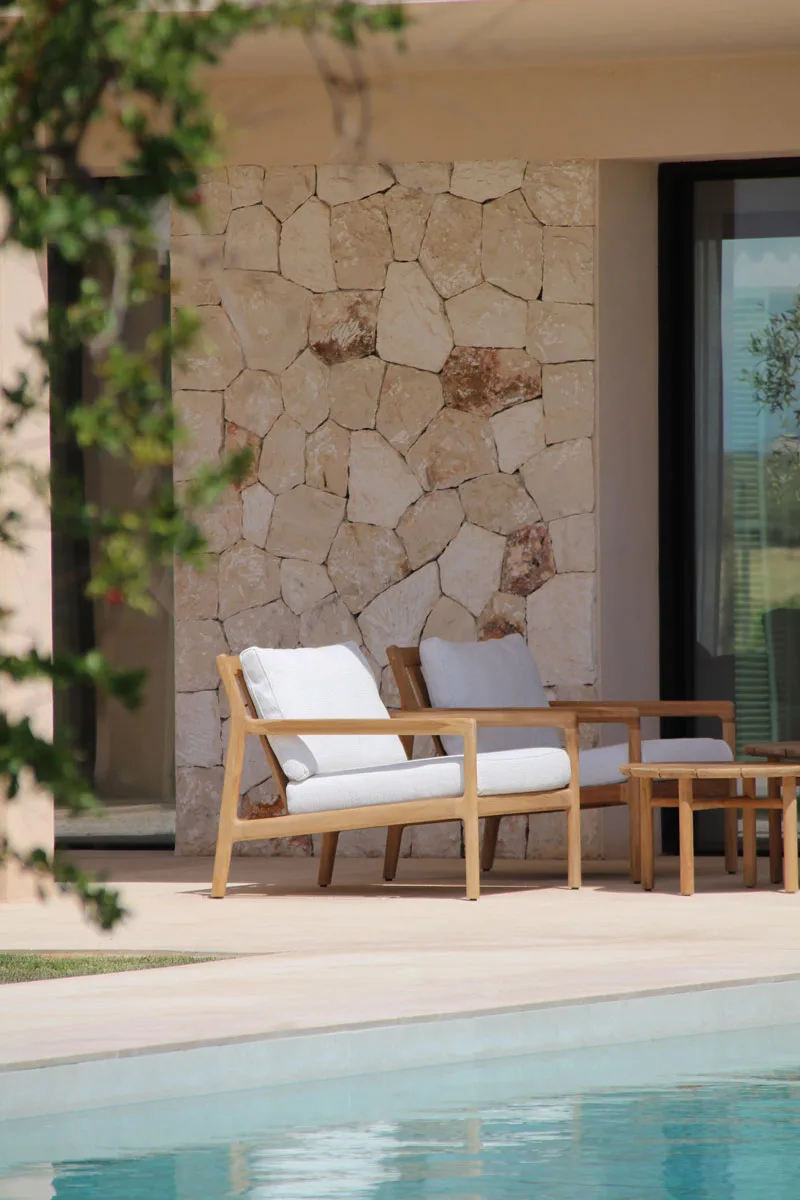
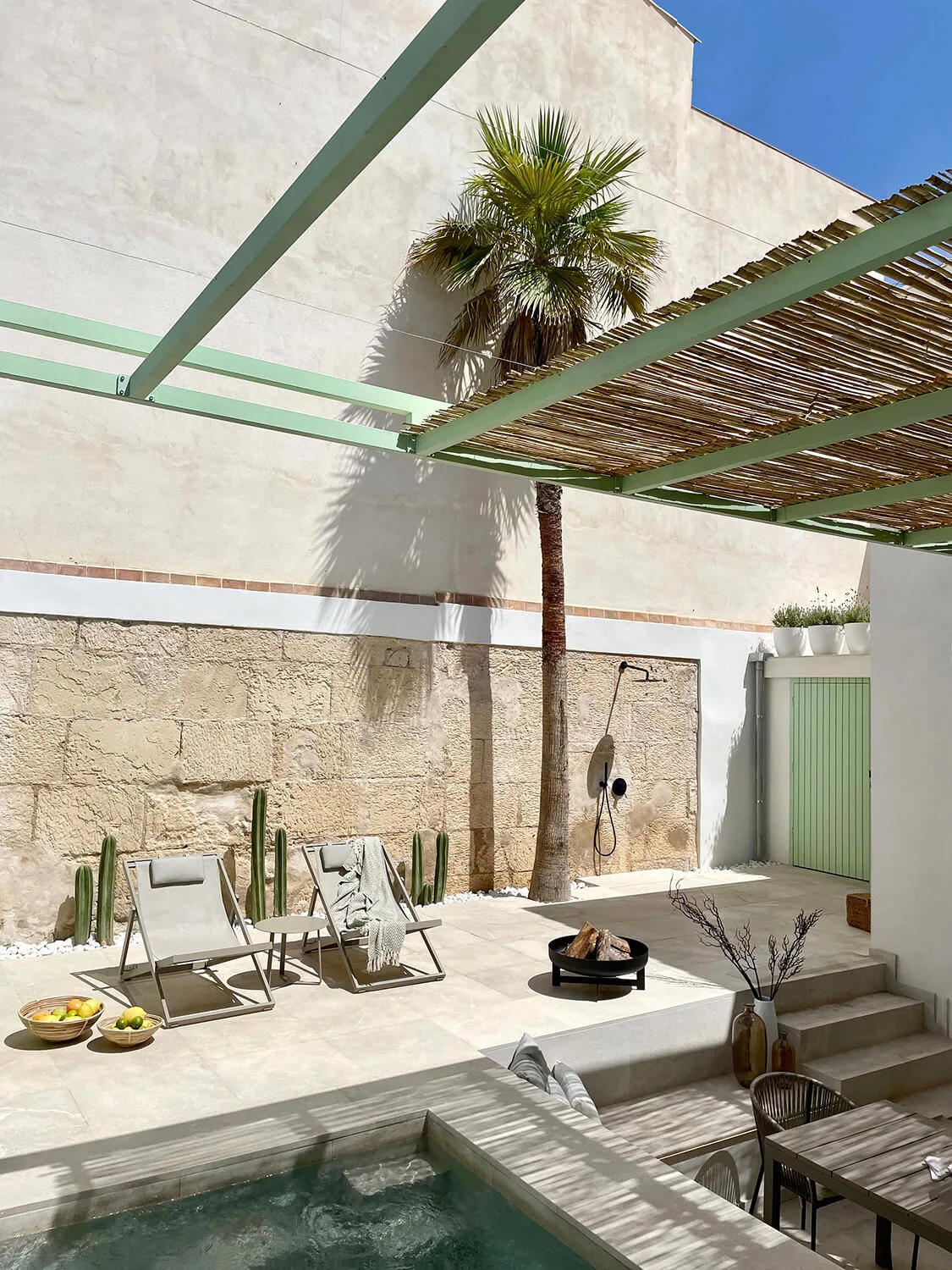
But natural stone in Mallorca is not limited to marès. Limestone in grey and beige tones, irregular flagstone paving outdoors and white Carrara marble worktops are variants that sit naturally together in the island’s contemporary projects. What they share is the ability to age well: stone doesn’t deteriorate over time, it settles. It gains character.
In projects like the ones you can see in our portfolio, stone is not an added decorative element. It is part of the architecture, of the way the space is perceived and felt.
Wood. Warmth, texture and presence
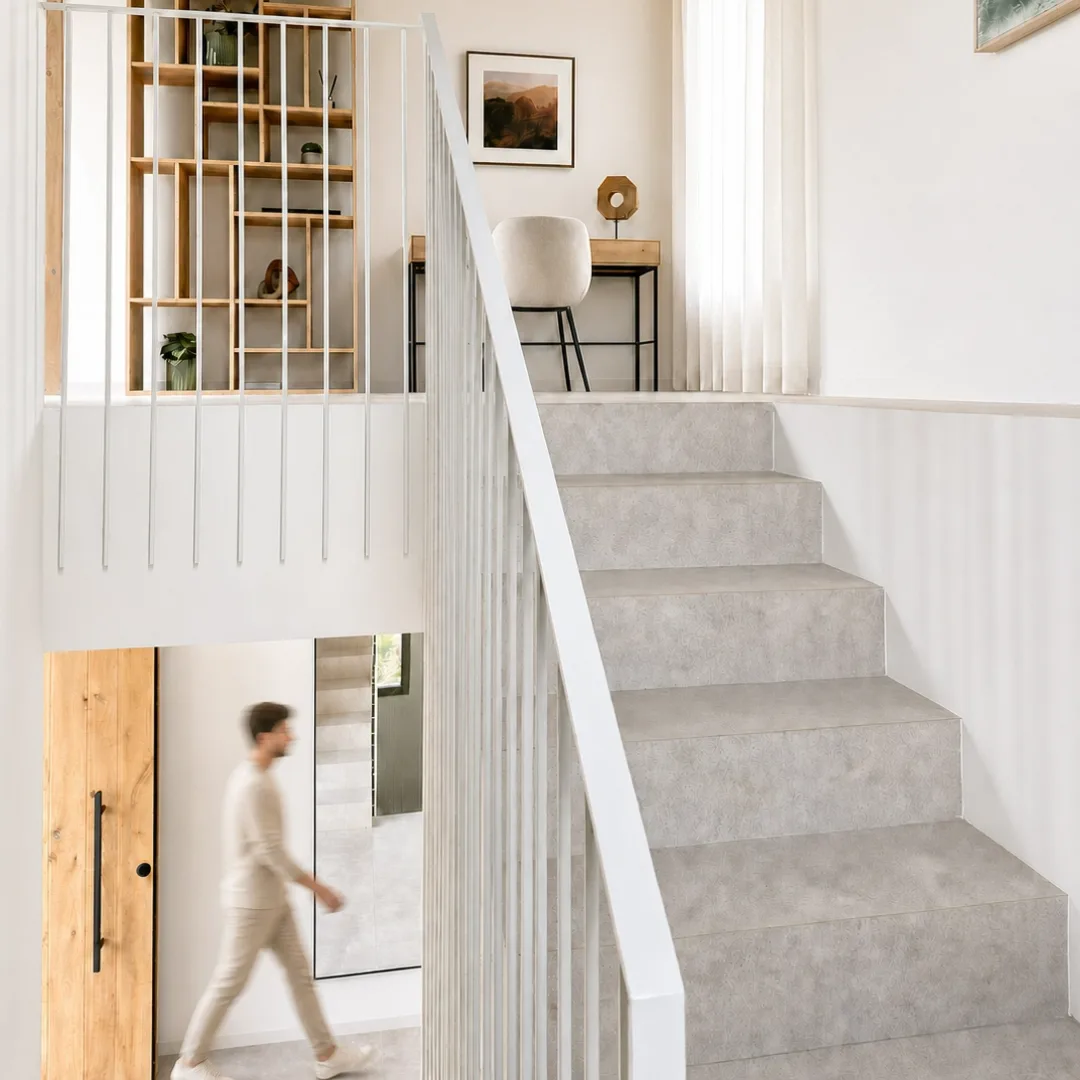
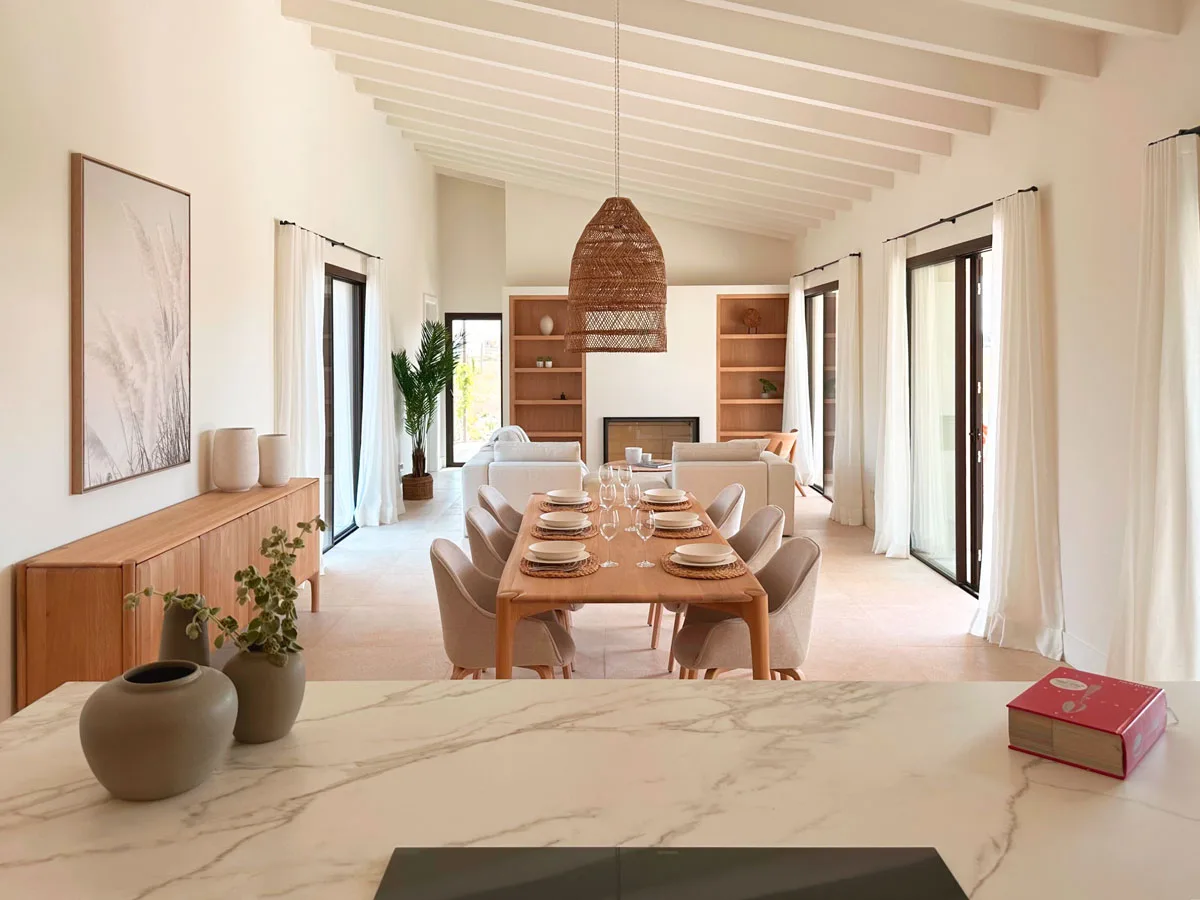
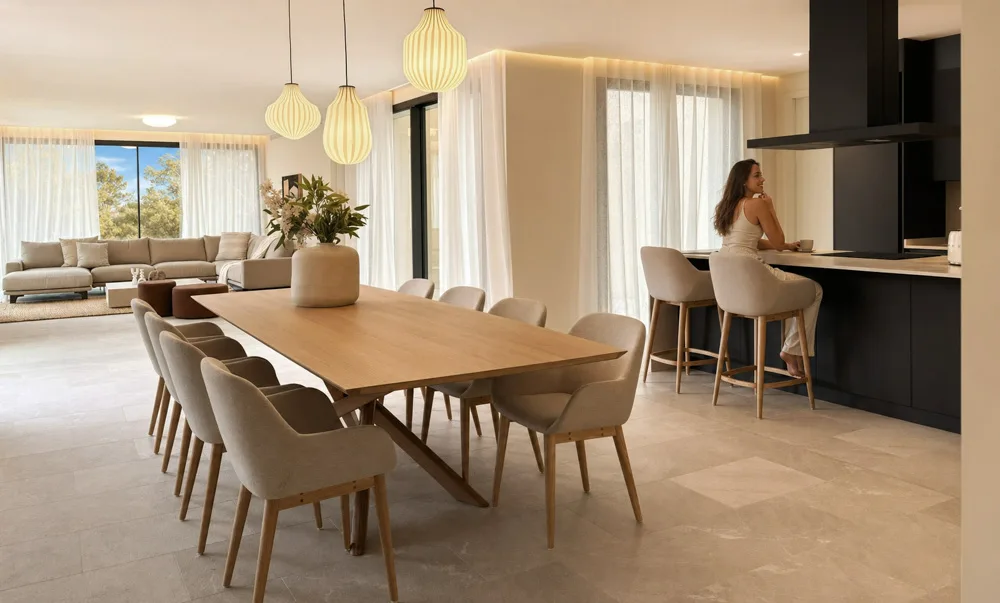
If stone brings solidity, wood brings warmth. In interior design in Mallorca, wood comes in many forms: exposed ceiling beams, door and window joinery, wide-plank floors, solid wood furniture in oak or walnut, and structural details such as staircases or built-in shelving.
The key lies in tone and finish. In contemporary Mediterranean projects, wood tends towards warm mid tones —natural oak, teak, aged pine— with matt finishes that absorb light rather than reflect it. No glossy varnishes and no dark woods that weigh a room down. Wood in a Mallorcan house should look as if it has always been there.
Furniture from brands such as Ethnicraft, with pieces in solid oak and teak, fits perfectly into this context because it starts from the same philosophy: honest materials, natural finishes and forms that don’t date.
Linen and organic fabrics, the soft layer of interior design
The hard materials —stone and wood— define the structure of a space. Fabrics define its atmosphere. And in interior design in Mallorca, linen is the fabric of choice for reasons closely tied to the climate: it is cool in summer, absorbs humidity, creases gracefully and photographs like nothing else.
Natural linen curtains that filter the midday light, cushions in sand and olive green, upholstery in bouclé or textured fabrics that invite you to touch them: these are the elements that bring to life a space that could otherwise feel too cold or too mineral. They are the human layer of interior design.
Washed cotton, jute in rugs and baskets, handmade ceramics for the table or as decorative pieces: all are part of the same material language that gives coherence to the best interior design projects on the island.
Ceramics, the detail that makes the difference
Mallorca has a deep-rooted ceramic tradition. The encaustic tiles of Palma’s old town, the glazed earthenware pieces that decorate façades and courtyards, the handmade tiles found in the kitchens and bathrooms of the best-kept houses: ceramics are one of the island’s most distinctive materials.
In contemporary interior design, ceramics are used selectively. It is not about covering surfaces, but about choosing one piece or one wall that adds character. A handmade ceramic splashback in a kitchen, a terracotta floor on a porch, a matt ceramic washbasin in a bathroom: these are the details that set a space with soul apart from a generic one.
How to combine these materials without the result looking like a catalogue
The question clients ask us most often is how to mix these materials without the result feeling forced or overly themed. The answer lies in proportion and colour consistency.
A space with stone, wood, linen and ceramics can be harmonious if they all share a palette of warm, neutral tones. Conflict arises when very different colour temperatures are mixed —a very dark wood with a very light stone, for example— or when too many different materials pile up in the same space without any one of them taking the lead.
The rule we apply at Trends Studio: two or three main materials, well chosen and well executed, always beat a collection of interesting references that don’t speak to one another.
Interior design in Mallorca has an advantage that not every setting offers: the island provides its own material vocabulary, coherent and beautiful.
Stone, wood, linen, ceramics: four materials that, used with judgement, can create timeless spaces that don’t need to follow any trend because they already have a deeper identity.
If you’d like to apply this philosophy to your home in Mallorca, you’ll find concrete examples of how we do it in our interior design project portfolio.